Thursday, October 16, 2008

Nu Jiang valley

I had heard that the Nu River valley in western Yunnan Province is a beautiful, untouristed area. It was part of a resupply obstacle called "The Hump" (due to the high mountain ranges) in World War II. I shared that information with some of my fellow travelers and Paresh from England and I decided to check it out for ourselves. We weren't disappointed.

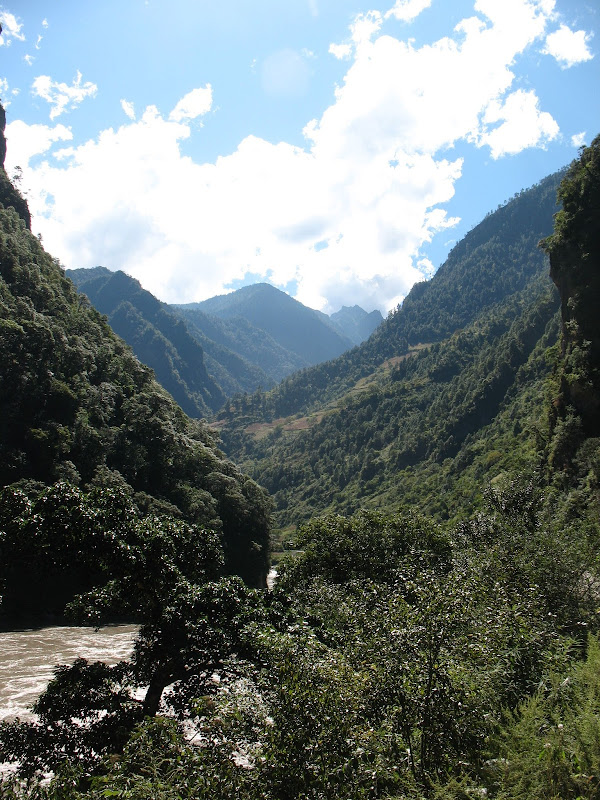
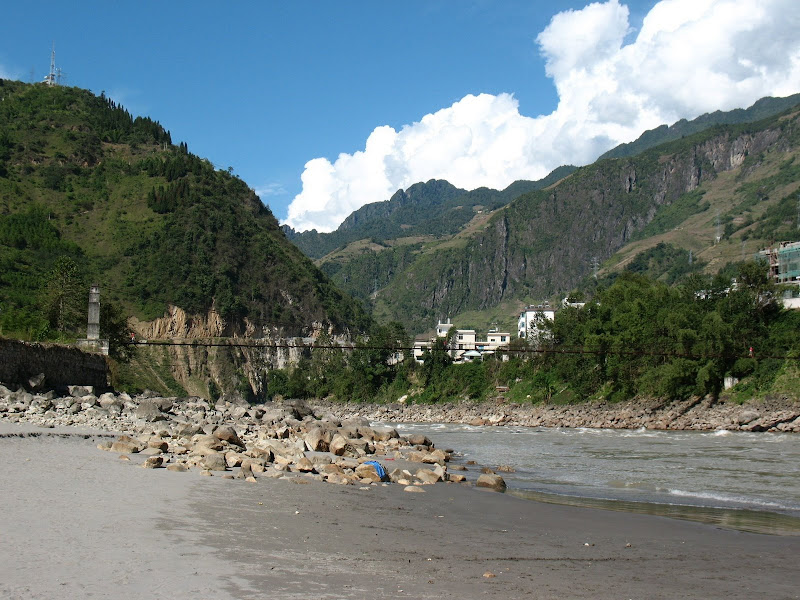
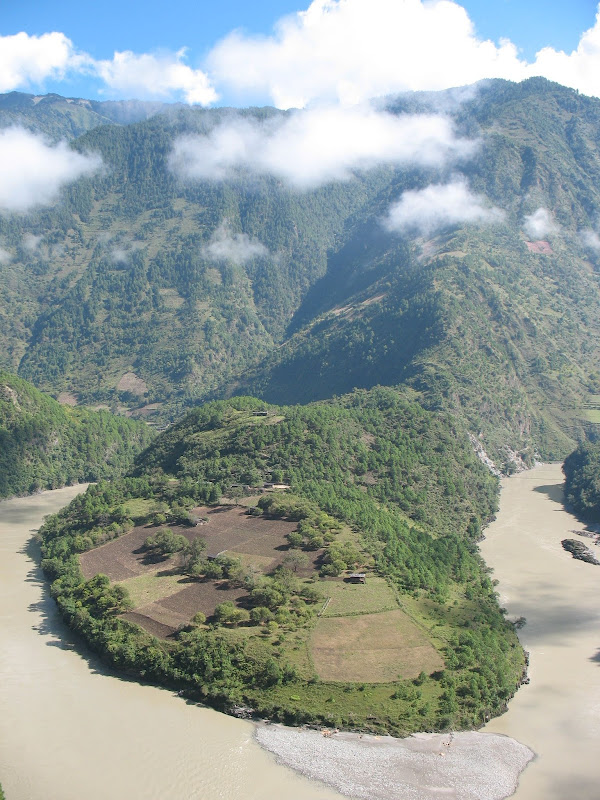
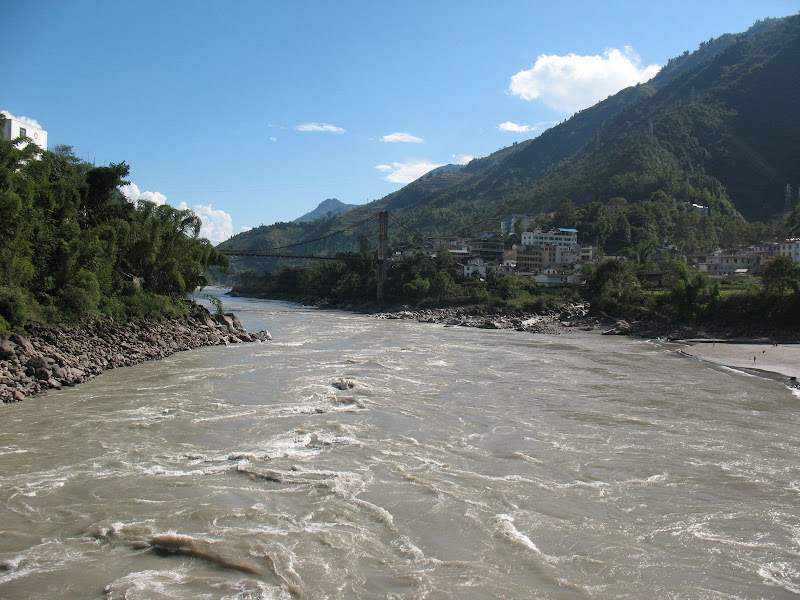
The Nu river (Nu Jiang) starts in Tibet, flows through western Yunnan and enters Myanmar, where it is called the Salween. It is entirely undammed. It is powerful. The current makes the Misourri look like a kiddie pool (and, amazingly, we saw a group of young boys playing in the Nu). There are dozens of areas with strong rapids. The photo below only begins to show the river's power:

From China


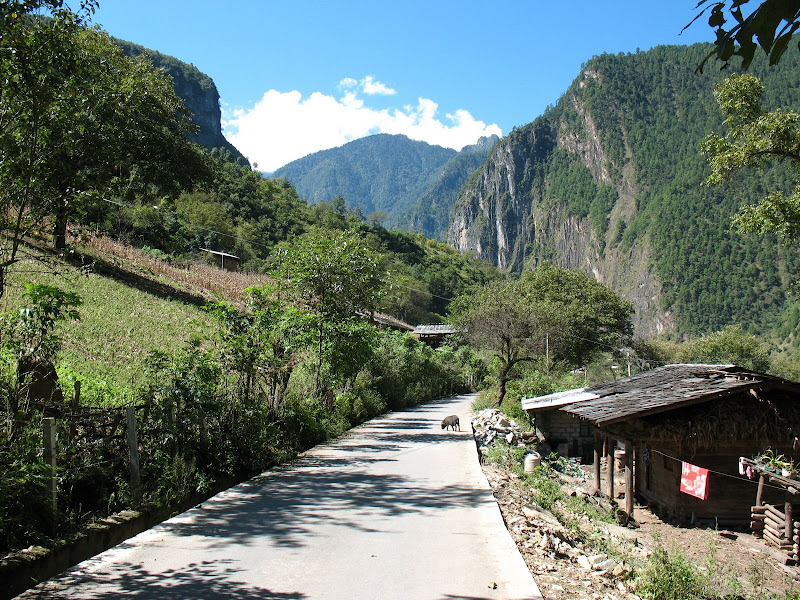
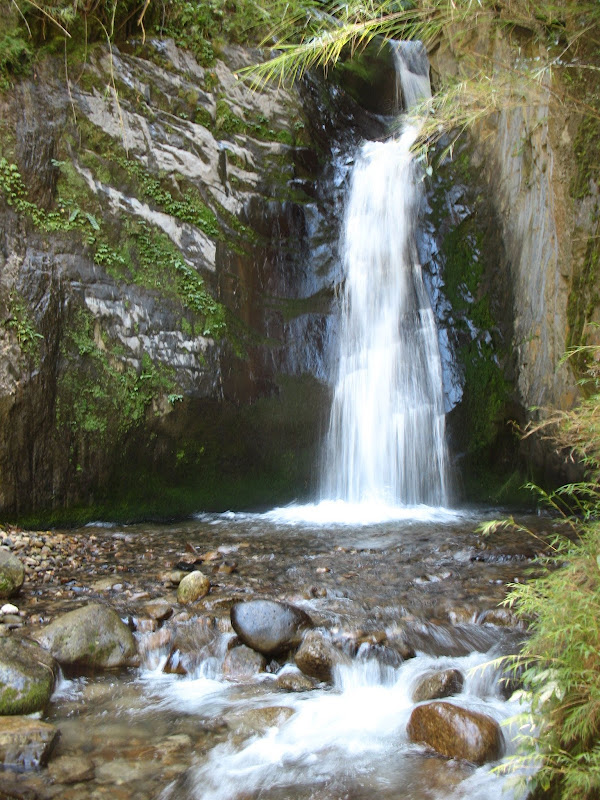
To follow the river in Yunnan, you must start in Liuku and work your way north. The river is surrounded by imposing mountains, which are dotted with small farms. Some of the fields were as much as 1,000 feet up the side of the steep mountains. I'm sure they don't go in to town regularly. We covered about 300 kilometers and walked the last 10, where we saw the best views of all. I'll just let the photos speak for themselves:

From China


From China


From China


From China


From China


From China


From China


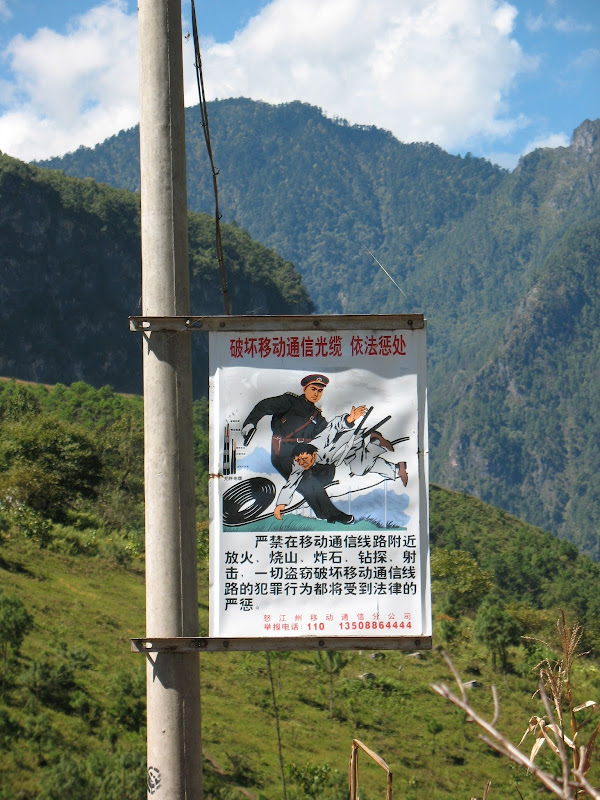
As you can see, some incredible scenery. And lastly, an interesting sign we came across. Basically it says, if you cut the power lines, we are going to beat the crap out of you. Ahh, communism.


From China


And now I'm in Kunming, after taking my first-ever sleeper bus. A sleeper bus is three rows across of two beds high. The bed was just long enough to hold me and just wide enough for me to put my arms at my side. Not ideal sleeping conditions but it got me here. Kunming is just another million-plus city with lots of concrete. I plan to have some western food and perhaps enjoy a bit of nightlife. But in a couple days I will move on again--I just don't know to where.

Friday, October 10, 2008

Ganja?

Dali is a great town. There's a new city (that no one visits) and the old town, complete with city wall and gates. It's a backpacker haven. It also seems to be the stoner capital of China. And the drug dealers are everywhere. They're not who you'd imagine them to be, either. Ladies, often in the traditional clothing of the local people, sidle up alongside wandering foreigners and make known what they have to offer. "Ganja?" they'll whisper. "Hashish? You want to buy?"

To escape the skunky smell that seems to hover over the city, I rented a bike and went off around the nearby lake. We're talking a big lake. I pedaled for something like five hours the first day and covered more than 35 miles to the other side, where I spent the night in a small town. The next day, I wimped out and only went a few more miles before I took the ferry back to the other side. My ass and hands hurt from the less-than-perfect road conditions.

It's rice country, and it's harvest time, so I had a good glimpse at farm life in China. They cut the plant and then bash it into a basket to release the grains of rice, which is later spread on the ground to dry, often just on the road or highway.

Of course I snapped a few photos on my way around...

From China


From China


From China


From China


From China


From China


...some nice views there, if I do say so myself.


Lastly, I've updated my map to reflect my travels so far in China. Play around with it and check out where I've been.


View Larger Map


Today or tomorrow, I'm heading out to some less touristed parts. The Hu river in very western Yunnan runs from Tibet, through Yunnan along the Myanmar border and into Myanmar in the south. It's apparently quite a beautiful area. May be away from the Internet again for a few days (the agony!), but I'll have more up soon enough.

Tuesday, October 07, 2008

The bare necessities

A quick update on my whereabouts。。。 I‘m in Dali, a pretty popular tourist/backpacker town in northwestern Yunnan Province。 Last post, Iwas in Shangri La, near the Sichuan border。 From there I went to Lijiang, which has an old town that’s been labeled a Unesco World Heritage site, but feels more like Disney Land。 Dali also has an old town, but it‘s home to more practical things, rather than street after street of souvenir stalls。I plan to spend a few days in the area,as there’s plenty to do。 Dali sits right next to a lake,and I intend to hire a bike and go around the lake over two or three days。 Some nice villages to stop at along the way。 After that, I‘m debating over a couple options。 More later。


And now for some basics, which I‘m sure you’ll be interested in。 At least my parents are every time Italk to them。

How/what do Ieat?

I haven‘t gone hungry yet。 And I’ve eaten remarkably little western food。 I‘ve had a cheeseburger twice and the odd order of fries at a hostel。 But typically, it’s Chinese all the way。I tend not to eat at hostels, as it is quite a bit more expensive than eating at a neighborhood restaurant。 I can say/read only a few food-related things in Chinese, so Ido tend to eat the same foods frequently。 I know how to order beef noodles, boiled dumplings and steamed buns like a pro, and I can read the symbols for those items。 Other times, I‘ll just point to something on the menu and hope it’s good。 Or if I‘m with a group of people, we can get several items to share, with rice。

It’s also fun to browse what street vendors have on offer and just ask for one of whatever they‘re serving up。 Usually quite tasty。 I‘ve had some amazing breads and fried dumplings。 My favorite dish so far was in Xian--Lamb soup with shredded bread, noodles and vegetables。 It felt like a bottomless meal。 Typically, I’ll spend about 30 to 60 cents for breakfast (usually some type of bread) and around 80 cents to 1。50 for lunch and dinner, unless I‘m slurging。 A homemade burger and fries today cost me three bucks。


How do I communicate?

People speak English in the weirdest of places。 I’ve found more people able (or willing) to speak it in smaller towns than in Beijing。 But it‘s not necessary。 Hand signals work wonders。 You can come up with a mime for nearly everything。 Also, the limited Chinese I know comes in handy nearly every day。 I‘m pretty proficient in numbers and know other important words like “today” and “tomorrow,” which are essential for arranging transportation。

So regardless of what you might have thought (or hoped for), I’m not entirely helpless here in China。 I‘m getting fed (good food) and I’m feeling quite unrestricted。


And since I know you’ve been so worried, Yes I‘m feeling quite a bit better。 I don’t know whether the herbal rememdy is to blame or time and warmer weather have done the trick。 Either way, fever is gone and just a bit of cough left。

Friday, October 03, 2008

Slip slidin' away... (almost)

The route from Xiangcheng in souther Sichuan to Zhongdian (now called Shangri La, in a tourism ploy) in northern Yunnan is amazingly scenic. You go over two very high mountain passes and are surrounded by beautiful rocky peaks.

Such as this one:

From China


But this was to be the first day in China that I've actually felt in danger.

The first pass took us back and forth, slowly up the side of an enormous mountain to a prayer-inducing altitude. On one side is the mountain. On the other is nothing but a vast expanse; a river is somewhere several thousand feet below. When there is a barrier, which seem to be quite arbitrarily placed, it surely won't stop a heavy bus.

But still, we made it up and down just fine and had our lunch break at the bottom. Getting going again, we come up to a muddy stretch of road--probably worse than the one I encountered last week. I would have sworn we'd end up stuck. The driver doesn't bat an eye. It's full speed ahead, and he blasts right through it. It was far from the only mud slick of the day.

An hour later, we're halfway up the side of a mountain. We've been criss-crossing up the side of the beast without issue when up ahead, I notice another horrible mud slick. I don't mean like wet, runny mud. I mean thick, gooey mud. The kind you lose a shoe in.

Half the bus is asleep (I have no idea how). The Chinese guy next to me looks worried. He stands up to get a better look. I do too. I don't know how we're going to do it. It's mud from the cliff wall to the edge--the edge of a 2,000-plus-foot drop. Can those trees hold us? I think. Once again, the driver is gung-ho into the mud track. We slide, we get stuck briefly, and we slide some more. If we weren't in an all-wheel-drive bus, we would have fishtailed right off the side of the mountain.

The Chinese dude and I are holding onto the seats in front of us for dear life, as though that will save us in the event of a fall. But we pull through. I breathe again and look over. Chinese dude makes the hand motion of his heart pounding. I feel the same. And that was only the first of many muddy paths in the road.

Going through one, a guy in the front starts chatting with the driver.

"How 'bout them White Sox?" he asks, handing the driver a cigarette.

"Yea, hell of a deal" he replies, as he lights up, oblivious to the fact that we are mere feet from certain doom.

Or they could have been talking about the Cubs; my Chinese isn't that good.


Bottom line, this was--bar none--the best driver I have ever seen. He knew exactly where to place the wheels, exactly what gear to use. Someone with less experience would have put us all in peril. So I hope he gets a nice $5/month raise this year.

By the way, if you're afraid of flying...take a bus trip in China.

Thin air, thick character

Litang is at 4,000 meters altitude. That's two-and-a-half miles. Because of the height, you experience very hot sun by day and bone-chilling temperatures at night. I hadn't had weather this cold in about a year and a half. Thankfully I didn't get the headache and malaise that many experience at these heights, but it did decrease my appetite quite noticeably. I spent two nights in Litang--the stay was cut by a third due to a fortunate crossing of paths and a growing impatience for holiday-makers (it's a week off in China right now).

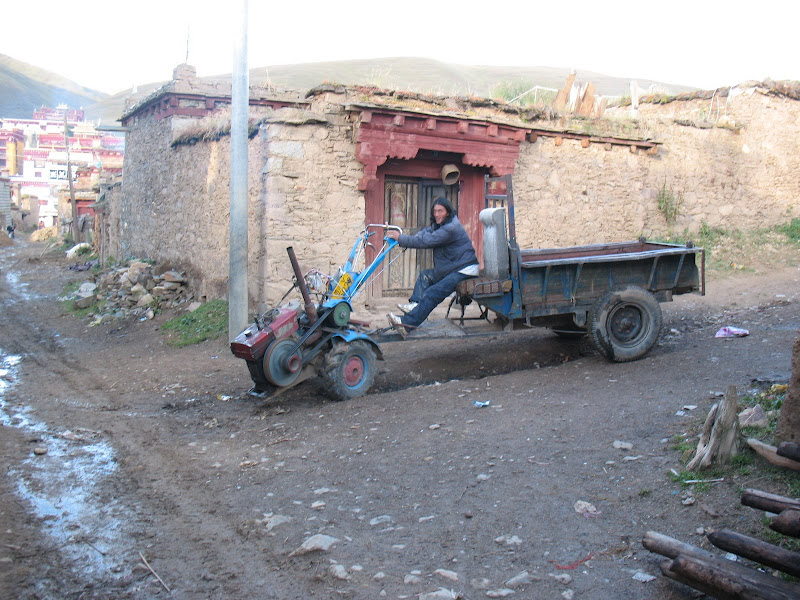
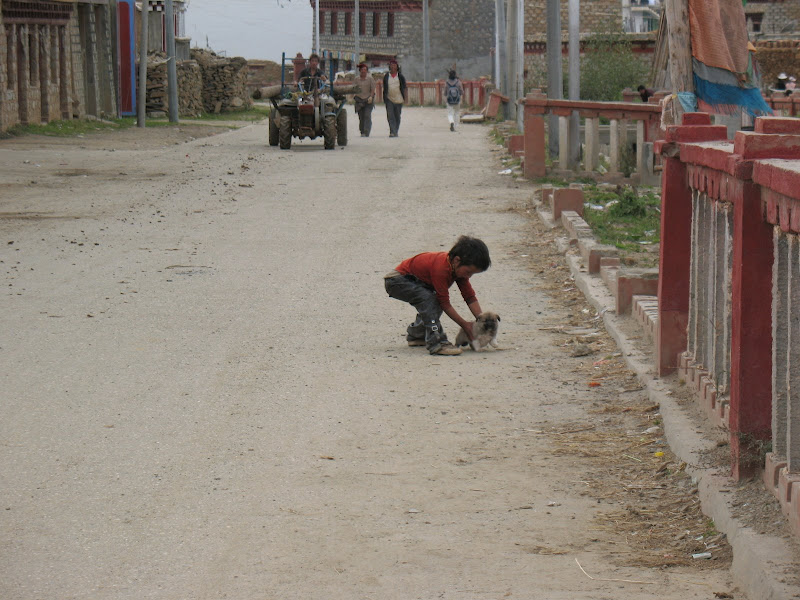
Litang, in western Sichuan Province, is quite close to Tibet, so Tibetans make up much of the population. And as I said before, the town also is home to a large monastary, which hosts some 1,000 monks. I spent most of my time in Litang wandering, simply enjoying the fascinating scenery, the Tibetan architecture and the welcoming people.

Looks a bit like sub-Saharran Africa, no?

From China


And I had never seen skies so blue.

From China


The ever-present yak population.

From China


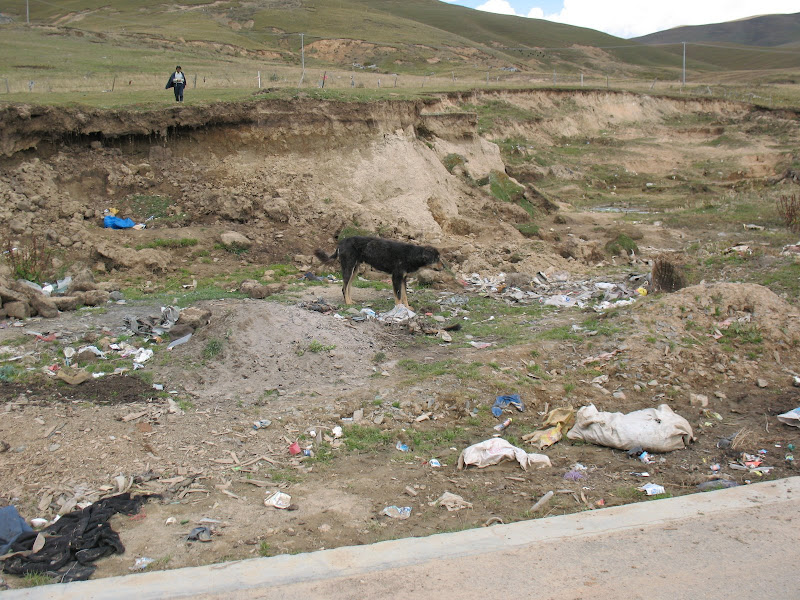
And the ever-present trash.

From China


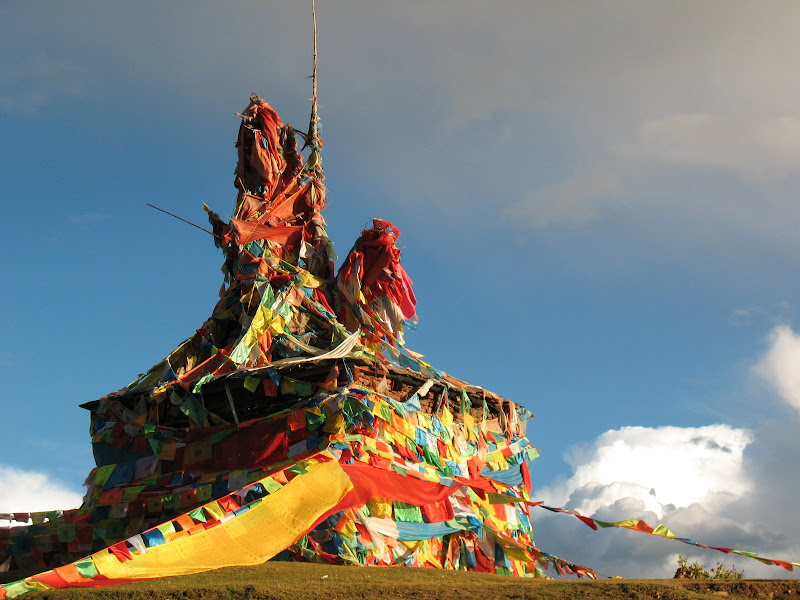
And the ever-present prayer flags.

From China


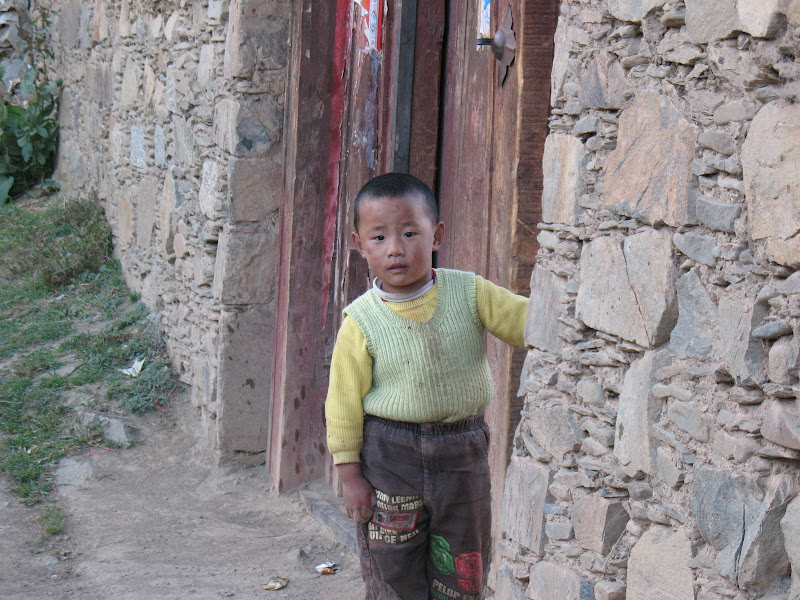
But it's the people who bring the most character to this town.

From China


From China


From China


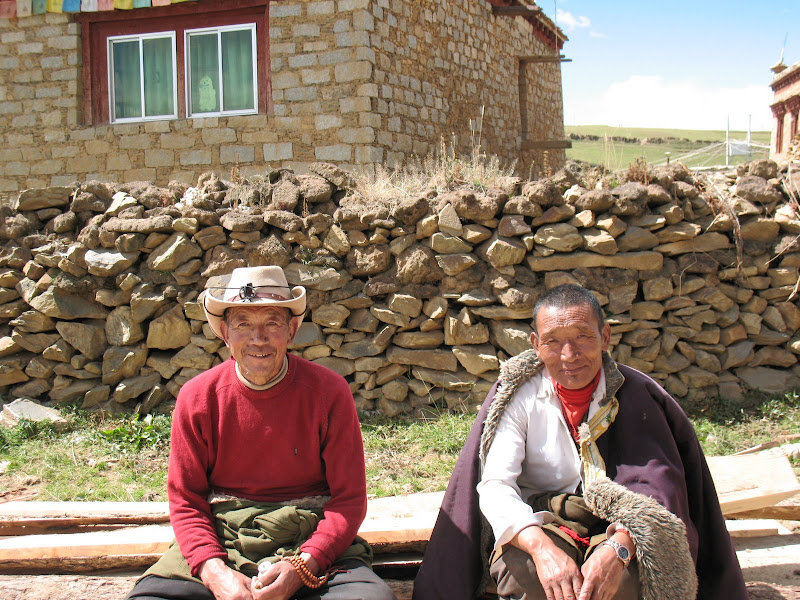
These two gentlemen invited me to sit with them, despite not speaking a word of English. This was a common occurence--waving you over, Please sit! America? Very good!

From China


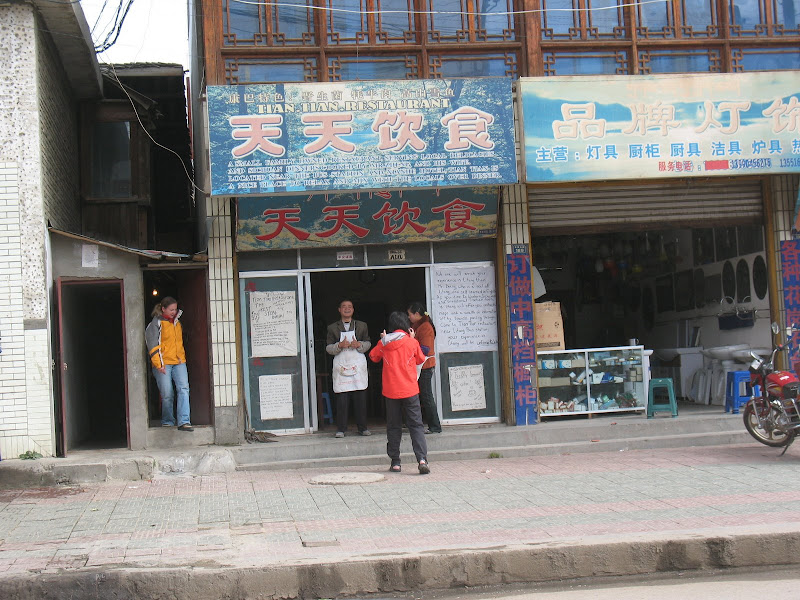
But one person in particular has a special place in the hearts of foreign visitors to Litang: Mr. Zheng. He owns a local restaurant and is excited to share all he knows about the area with visitors. The walls of his place are full of postcards and photos from those who have passed through, and his guest book is full of messages from around the world. Sim, the adventurous hostel owner who helped me plan this backwater trip, has become good friends with Mr. Zheng and recommends that all visitors stop by during their stay in Litang. In the end, as he usually does, Mr. Zheng found me.

Walking down the street, I hear a hello! which is perfectly common in this town. I turn to return the greeting and recognize Mr. Zheng from the photo is Sim's brochure. I shake his hand and tell him that not only had I met Sim, but he should be passing through Litang sometime soon (with the Lonely Planet writer). I sit down for lunch and a few minutes later, Mr. Zheng hands me his cell phone. "Sim!" he says. Turns out he and Carolyn are due to arrive in Litang that very afternoon. I enjoy dinner with them at the restaurant (compliments of Mr. Zheng) that night and let them know I will try to meet them for breakfast as well.

I'll give you the Cliff's Notes version of the rest of the story:

Oct. 1 is a one-week holiday in China. Lots of Chinese travelers who don't know proper hostel etiquette invade my hostel. Loud partying ensues, plus more vomiting than I've ever seen at one time. Unable to even take a shower the next morning because of incompetent hotel staff, I go to breakfast with Sim and Carolyn and am convinced to skip town that day and head south with them toward Yunnan Province. We spent the night in Xiangcheng and the next day they headed back north, while I went south.


Sim takes a photo of Mr. and Mrs. Zheng in front of their restaurant.

From China


An ethical decision

Tibetans have a unique way of disposing of bodies when people die. Due to the altitude, there are few trees for burning and the ground is often too hard to dig graves. Sky burial has become the method of choice for many. It's also become somewhat of a morose tourist attraction.

I will leave out the gruesome details, but what happens in the end is the body is devoured by vultures, who take it up to the sky. Mr. Zheng encourages travelers to check out a sky burial, and his guest book has many recommendations from other travelers as well.

In the end I gave it a miss. Not for fear of getting sick at the sight of the mutilated body. But because I simply had no business being there. It's one thing to go to a stranger's funeral. But this, I felt, is a far more personal event; one which a foreigner has no part in.

Tuesday, September 30, 2008

What else could go wrong?

Plenty did. Thankfully we only suffered briefly.

I was off even further south to the town of Kangding, which lies at the confluence of two rivers, nestled between some magestic mountains. And yes, I had to find another van. This wasn't too much trouble, however there were seven of us crammed in, including luggage. Not good for the knees and back.

Twenty minutes in, disaster one hits. The Jeep in front of us flips over going around a downhill bend. Everyone managed to climb out, seemingly unharmed, though their proximity to the edge of the road and an uncertain fate down the side of the hill left them undoubtedly shaken. I didn't take any photos as I didn't think it appropriate. We stopped and so did several other cars. We flipped their jeep back over and were on our way. I don't know whether they were able to drive it.

A quick note about the roads: Basically, if it's not a major MAJOR highway, don't expect much. IF it's paved, it hasn't been repaired since Mao was alive. But more often than not, it's dirt and rocks. Gravel would be an upgrade. We're talking major pain in the ass, literally.

After the Jeep incident, our driver seemed to be a little more cautious. We were driving down the side of a mountain on dirt road with no guardrails. But we didn't get far. Remember the rain I told you about in my last post? It did a number on the road. A bit washed out and mud everywhere. And wouldn't you know it, two genius truck drivers going opposite directions got stuck in the same spot!

From China


And when I say stuck, I mean it's gonna take the People's Army to get them out. There was quite a lineup of cars, many of them vans like mine. Everyone got out of their vehicles and tried to determine what to do. Some started digging around the wheels. Some drivers tried to go between the two trucks but only slipped in the mud.

Finally a solution was decided upon. Since there was just enough space between the trucks to get the average car and van through, they would fill in the ruts so traffic could pass. Quickly, everyone began gathering rocks and sod from the nearby fields and patched in the holes.

From China


And it worked. A few cars through and it was our van's turn. And about 20 minutes after we stopped, we were back in the van and bouncing down the road.


I spent the next two nights in Kangding. It's a nice little town, but not much to do. I didn't even take any photos. I switched hostels after one night because the first was absolutely abysmal. Meanwhile I'm working up an awful cough I can't kick and my temperature is rising. I imagine it started with the polution, then the cold air just kicked it up a notch.

So, long story short, yesterday I took a REAL bus west to Litang. It was a 10-hour ordeal up and down mountains. We could have been in Colorado, if it hadn't been for the smattering of Tibetan houses--and the military checkpoint. They pulled the bus over, the boss came on, pointed me out and I had to get off. Pretty easy though. They took down my visa details and asked where I was going. Reason being, I believe, is that if I were to continue on this road, west of Litang, I would end up in Tibet. They don't want any foreigners going there without permission.

Later, at about 5,000 meters, we drove through a hell of a hail storm. The hail was tiny and it was cold enough that it didn't melt. The ground looked like it was covered in snow.

Litang is a cool little town. It reall is in the middle of nowhere. It's in a basin, surrounded by mountains. It's also at 4,000 meters (about 2.5 miles), so it's quite cold! There's a spectacular Tibetan lamasery (think monastery) in town, so monks on motorcyles are all over. And the people, especially the children, are quite friendly. A little boy attacked me last night and then wouldn't let go of another guy's leg.

I will wait until my time here is over and then post some great photos.

Now about that cough. I'm pretty convinced I've got bronchitis or something similar. So I went to the local pharmacist/doctor and told him what was going on with the help of my phrase book and some miming. He said I should take a normal pain killer/fever reducer, which I've got, but also gave me an interesting box that's all in Chinese, except the name of the drug in Pinyin: Si Ji Gan Mao Pian. With the help of Google, it looks like this is an herbal remedy, made from mulberry and crysanthemum. And apparently it treats the following: Bronchitis; Conjunctivitis; Cough; Headache; Laryngitis; Pharyngitis; Respiratory tract infection; Slight fever; Sore throat; Sore throat; Swelling of the throat; Dry mouth; Rhinorrhea; Sneezing; Thirst. So I'll give it a whirl. It only cost me 15 yuan ($2.25). If I'm not feeling better the day after tomorrow, I'm going back and demanding real drugs.

That's all for now. I'll be in town for a couple more nights (you never know when you'll get another soft bed; I'm enjoying it while it lasts!). After that, I'm heading south and into Yunnan province, home to a number of China's minority groups.

Wow, duct tape DOES fix everything!

After leaving Zhonglu, I spent one more night in Danba, enjoying a private room for a mere $3.50. The next morning, I was off to the Tagong Grasslands, which are perched up high in the mountains at about 2,600 meters.

Since Danba is quite small and Tagong is like a speck of dust on the map, there is no bus service between the two cities. Sim informed me that it's quite common to simply go down to the bus station and find a van going where you need to go. Shady as it sounds, it's actually pretty legit, though technically illegal. There's a fixed price that all the guys follow between each town. And the vans--wow. They're all very tricked out and blast Tibetan pop music, often with accompanied video on the passenger visor.

My first van was without incident and took me a few hours south to Bamei, where the driver handed me off to a Tagong-bound van. That's when the fun began. The driver and his friend in the front, luggage in the back and me and two tibetan monks in the middle. About 15 minutes out of Bamei, tssss. Punctured tire.

Our driver quickly finds the hole and covers it with his finger. Sidekick searches through the van for some way to patch it. Obviously there's no spare A stick and some really crappy electrical tape are all he comes up with. Realizing this isn't going to get us through the next 50 minutes to Tagong, I come up with a solution. Bubble gum and duct tape. Yes, really. I just happened to have both on me (someone told me once to wrap some duct tape around a pen or marker so you have some with you).

From China


Gum chewed and duct tape applied, we were off. And I'll be damned if this quick fix didn't get us all the way to Tagong, through some terrifically shitty roads. But to cap it off, the jerkoff charged me the whole 15 yuan for the trip.

Tagong

Tagong is basically a one-street town--actually I'd call it an outpost. It's surrounded by groups of yak hurders. Imagine an old wild-west film except the cowboys are all Tibetan. Unfortunately I didn't get a great shot of the town. Only this one that I took after a rain storm.

From China


Being small, there's not a lot to do except for some hiking in the nearby hills. But at 2,600 meters, my lungs didn't feel too up to it, especially since it seemed as though I as coming down with some sort of lung ailment (more on that, and the treatment, later).

To get a good view of the surrounding area, I opted for an hourlong horse ride. It was a bit silly but which one of you can say they've ridden a Tibetan horse among the mountains in Sichuan? My trusty steed was quite small actually. All the horses are about 2/3 the size of those we typically ride in America.

From China


And the views I enjoyed:

From China


From China


Other than that, I kept pretty quiet. I had yak pizza. Yak tastes like gamey beef. I don't recommend it. It rained a bunch and I was the only foreigner in town, as far as I could tell. And the next day, I had more moving to do.

Sunday, September 28, 2008

Chinese hospitality

Hey gang, I'm back. Sort of. This is my first time on the Internet in more than five days! How about that? Hell, the town I stayed in last night didn't even have Internet! This has been one of those weeks where it sucks that I'm traveling alone. Not because I've been lonely, but because it's too bad no one else was there to see the amazing stuff I've experienced. I've got several days of fun to fill you in on, and I'll start with one of the most unique experiences I've ever had.

Anyway, when we last saw our hero, he was staying at the amazing Sim's Cozy hostel in Chengdu, AKA smog central. Not only does Sim (Singaporean; his wife, Japanese) have a great hostel, he's also a top-notch guide and living Sichuan encyclopedia.

Lonely Planet, or as travelers know it, The Bible, is getting ready to put out its next edition of the China guide. The Sichuan province author just so happened to be staying at Sim's and just so happened to get to talking to Sim's wife about the research she needed to do in western Sichuan. Sim, always up for an adventure or road trip, said he'd hire a van and driver and go with her on a two-week excursion.

Long story short, I happened to talk to Sim the night before they were to leave, and he invited me to come with them, for the duration or just to the first stop, Danba. The bulk of two weeks in a small van didn't sound too appealing to me, so I opted to join them only for the 11.5-hour ride from hell to Danba. If you think you've been on a bad road, you have seen nothing. When's the last time it took you five-plus hours to cover 150 miles?

Ride over, we spent the first night in Danba proper. Dark when we arrived, this was the view I was greated with (did I mention that Danba is at about 2000 meters?) in the morning.

From China


I spent the first half of the next day with Sim and the LP writer, Carolyn. We visited a couple village in the area that are scattered across the sides of mountains. Beautiful doesn't even begin to describe this. The villages are populated by Tibetan familes and are known particularly for their watchtowers, which are about 800 years old.

We went to one, Zhonglu, for lunch. The van was missing one passenger when it left, however. This wasn't just my lunch site--it was my dinner and breakfast site as well (and the same over again--I couldn't stay here just one night!). A few shots of the paradise I enjoyed for 48 hours...

From China


From China


From China


From China


And the scenery was only the half of it. The people were incredibly friendly and welcoming. Walking through the twisting roads and paths of the village, everyone greeted me with a smile and hello! (or ni hao! or tashi dele--Tibetan).

These guys invited me to join them during their break from making a stone path for some yak butter tea--quite salty. And being at about 6,000 feet, I could feel the thing air, but these guys could run circles around me, smoking cigarettes the whole time.

From China


And the children were very energetic.

From China


But most of all, I'll remember my hosts at the village guesthouse. The proprietor was the only person in the village who spoke any English, other than "hello" or "tea." And to say he "spoke" English is generous...but he was as great a host as you can ask for. His wife is an excellent cook. Every meal was like a buffet. One dinner featured 10 different dishes. Here was my lunch on my last day. Yes, this was just for me!

From China


And it was all served up by a beautiful young Tibetan girl. These three were more than generous, always making sure I had a seat and that I had enough food for a small family. Here's a photo of my hosts, the women wearing their traditional headwear...I think the woman on the right didn't want her photo taken.

From China


I could have stayed much longer than two nights. But I had places to be. My next destination was Tagong Grasslands. A preview of what's to come in my next couple posts:

Wow, duct tape DOES fix everything!
What do you do when there's no bus service, plus America saves the day and goes to the Wild West.

What else could go wrong?
Another exciting bus-less journey with plenty of mayhem along the way.

Monday, September 22, 2008

heading out of town

tomorrow morning, I'm heading out west to visit some smaller towns and villages. I will get a ride to my first stop with the owner of the hostel, sim. He's going on a trip out west and offered me a ride. I'll be out west for about a week. No updates until I get back to Chengdu, unfortunately. But I will have perhaps the best update yet once I get back.

Friday, September 19, 2008

Whew

OK, so when we last left off, I was in Shanghai, writing a half-assed update because I had crap for computer access. I can finally give a proper update of some exciting things I've seen in the last week, complete with plenty of photos!

Shanghai

Shanghai... Well, for starters, it's a lot different from Beijing. It's China's financial capital. Lots of modern buildings on one side of town, just across the river from some great old architecture. I prefer Hong Kong, however...

Looking across the Huangpu River at Pudong, the financial district. The odd-looking tower is the Pearl tower, which I believe is the tallest structure in China.

From China


Now if I turn around, here is what you see...

From China


Now, back around again. Just a little further south from the Pearl tower, you can see China's two tallest buildings.

From China


The one that looks kinda like a bottle opener is the Shanghai World Finance Center. I went up to the observation deck, which is on the floor just over the big hole. It has a glass floor, so you can look down on the rest of the building.

From China


Terracotta Warriors

From Shanghai, I hopped a train west to Xian. I'll give the rundown on the trains later. I wasn't so much interested in Xian, as it's a big city of 7 million. It does have a cool wall that encloses the city center. The big reason to visit Xian is to see the Terracotta Warriors. They're more than 2,000 years old, but were only unearthed in the 70s. The first emperor of China, Qin, ordered them built as an extension of his tomb so that he would have protection in the afterlife. Excavation is slow and ongoing, but there are plenty of soldiers on display. Each soldier's face is unique.

From China


From China


From China


I spent only one night in Xian, as I'm eager to get started on the "real" part of my trip. I intend to spend a lot of time in Sichuan and Yunnan provinces, which are in southwest China, near Tibet. There is a lot to see in these provinces, including many small minority towns. I'm in Chengdu right now, which is another rather large city, but it's a good launching point for seeing other areas.

As far as my safety, given that this year's earthquake was here in Sichuan, I won't be going too near the affected area. I probably will be heading to the west and south of Sichuan. The owner at the hostel (Sim's Cozy Garden Hostel--big plug! Perhaps the best hostel I've ever stayed in!) here said he could give me a lot of recommendations for some cool things to see. I'll leave the details for later, but it sounds like I could have a lot of fun in the next couple weeks.

Meanwhile in Chengdu...

Pandas

The main giant panda breeding center is here in Chengdu. Only about 1,000 giant pandas remain in the wild, so their work here is very important. We got to see pandas of all ages doing what they do best--eating bamboo and sleeping. It was quite cool; I'd never seen a panda before. I saw pandas as young as one month old, but we're not allowed to take photos of them since their eyes are underdeveloped and camera flashes would harm them.

From China


From China


From China


In the coming weeks, I'll likely be heading into more rural areas. My internet access will be sporadic, but I promise to update when I can, with plenty of photos. I'm very excited about the possibilities.


And now a quick note about pollution. Perhaps the best days I've had in China were in Beijing, which has been called the most polluted city in the world. But due to the Olympics, several restrictions on factories and cars were in place that made the air much cleaner. I had some great blue sky days.

But if Beijing is usually the worst, I am scared of what that would be like. Xian and even more so Chengdu are horribly polluted. It may very well be a bright sunny day out but I can't tell because the entire sky is white/gray and visibility is typically less than a mile. It's absolutely disgusting. Blowing your nose can produce all colors of goodies. So if not for the people and the scenery, the fresh air is another reason to get out of urban China.

Monday, September 15, 2008

Quick update

just a few quick things. No photos for now as hostel comps are crap and net cafe wanted to see my passport. So it's update by iPod. Leaving shanghai today for Xian. Shanghai is cool but it's just another big city. Interesting contrast of oldand new on opposite sides of the huangpu river. One side is old wall street style columned buildings and the other is dozens of skyscrapers including the tallest in china. Lots of beggars and street hawkers here, which is a major difference from Beijing.

Overnight train to Xian tonight. That's him to the terracotta army. Google it if you don't know what that is as iPod can't copy and paste links. May ormay not stay in Xian. It's a city of several million and I'm ready to get to the smaller cities and towns and rural areas. So it may be 48 hours before I have net access or a real bed, tho the train isn't so bad. So when you next hear from me I'll either be in Xian or Chengdu in the Sichuan province. And I'll get some photos up soon thereafter.

Friday, September 12, 2008

St. Louis of the East

Qingdao is proud of its beer. It's everywhere. Walking down the street, people call "TsingTao PiJiu" my way, letting me know they've got beer; nevermind their food. They do beer differently here than in Beijing. Rather than tall bottles, every restaurant has kegs stacked outside (not refrigerated). You can even get it take away in plastics bags--they sell it by weight. I visited the brewery yesterday, which had a nice little museum that explained the century-long history of TsingTao, all the way from its German roots.

Other than the beer, QingDao is just kind of a typical big city. The beaches leave a little to be desired, and the haze/smog is ridiculous until late in the day when it finally burns off. There is a great fresh food market just down the street from where I'm staying...lots of fresh fish, crabs and shellfish. Fresh baked goods and tons of fruit and veg. And the smells... well, it's a unique combination of good and bad. One food specialty of Qingdao is barbecue skewers. Restaurants set up a little grill out front and cook up skewers of seafood and pork with delicious seasonings.

I'm off to Shanghai in a couple hours on an overnight train. Something like 18 hours! It's my understanding that Shanghai has perhaps topped Hong Kong as Asia's top city. Construction is everywhere and it's very modern and metropolitan. So I'll get in, see the sights and get out. More to come, from Shanghai!